Three reasons to focus on thoracic sling development
The thoracic sling is a key component in sound movement. Here are three reasons why you need to pay attention to it – regardless of breed, discipline or level of riding.
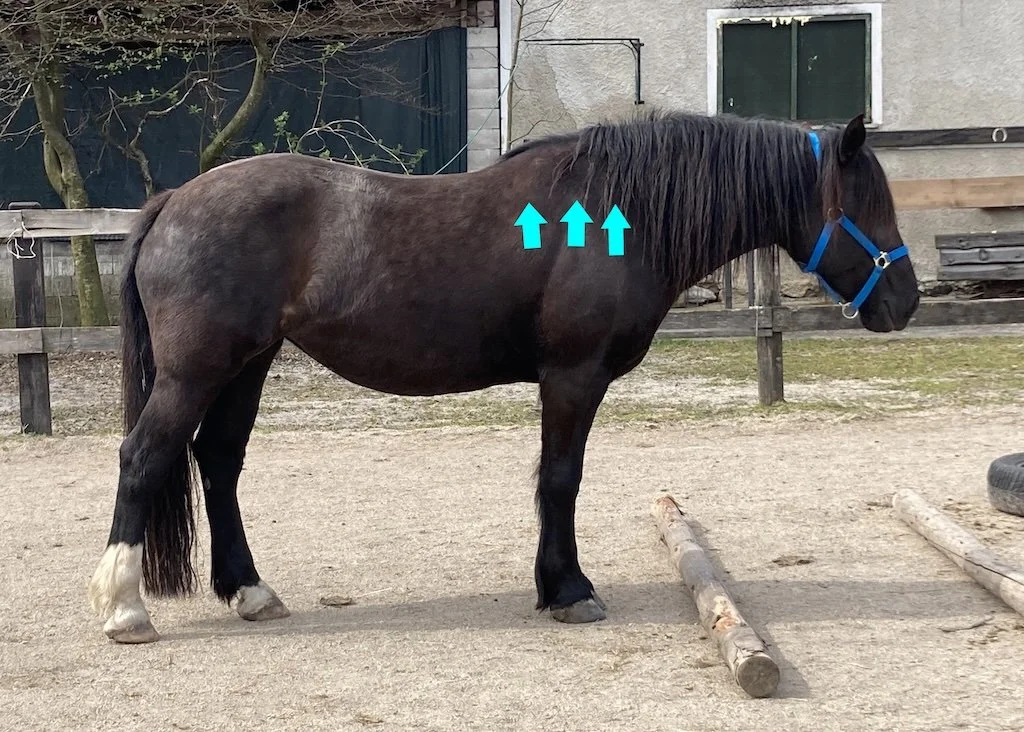
A developed thoracic sling protects the lower limb, the joints and the back.
The thoracic sling – the muscles attaching the front limb to the axial skeleton, plays a huge role in sound movement. When sufficiently developed and properly utilized, it acts as a shock absorber and enables the spine to work in an optimal way. And while the importance of developing these crucial muscles has been stressed more and more in recent years, many riders still don't realise that this applies to all horses, regardless of breed, discipline or level.
Some riders competing in dressage and show jumping might say that they don't need to develop the thoracic sling, because they are focusing on developing strength in the hind end. But the truth is, you cannot develop the hind end properly without a strong thoracic sling. Some riders might say that they only ride their horse on the trail, so they don't need these »fancy muscles«. But, long term soundness, even for the weekend warrior, is hard to achieve without a well-developed thoracic sling. Here are three reasons why thoracic sling development should always be on your radar.
1. Flexor tendon protection. Tendon injuries are very, very common in horses. The thing everyone seems to forget is that tendons are not stand-alone units, they are a part of the muscle. And if the muscle is not doing well, the tendon will be more exposed to potential injury. Obviously, the flexor tendons of the distal limbs are not directly connected to the thoracic sling muscles, but muscle imbalance and tension tends to spread from one muscle group to the other. A well-functioning thoracic sling is necessary for well-functioning distal limb flexor muscles.
2. Less impact on joints. Muscles are way better shock absorbers than joints are, simply because they have infinitely better blood supply, enabling regeneration. Every step the horse takes, we want the soft tissues to absorb as much force as they can, so the joints have to absorb less. Every step the horse takes using his thoracic sling properly, is a step that he doesn't have to overuse his joints. In the long run, the steps add up.
3. A neutral spine. We talk a lot about how important back health is for horses, but we tend to forget that the spine is not limited to the back area. The transition between the cervical and thoracic spine (found just behind the scapulae), is a key component to how well the back can function. If the horse uses his thoracic sling, he can lift his front end up between the front legs. This changes the angle of the cervico-thoracic junction and influences the angle of the entire thoracic spine. When the spine is in the »neutral position«, the back is able to be a good bridge between the hind and the front end.
These are just three ways in which a healthy and strong thoracic sling protects the horse from injury. Putting in the work to develop this important area is not overly complicated and is a great investment in the horse's future.