Muscles don't lie
Muscles tell us a story of how the horse’s body responds to load. Here are some red flags to look out for.
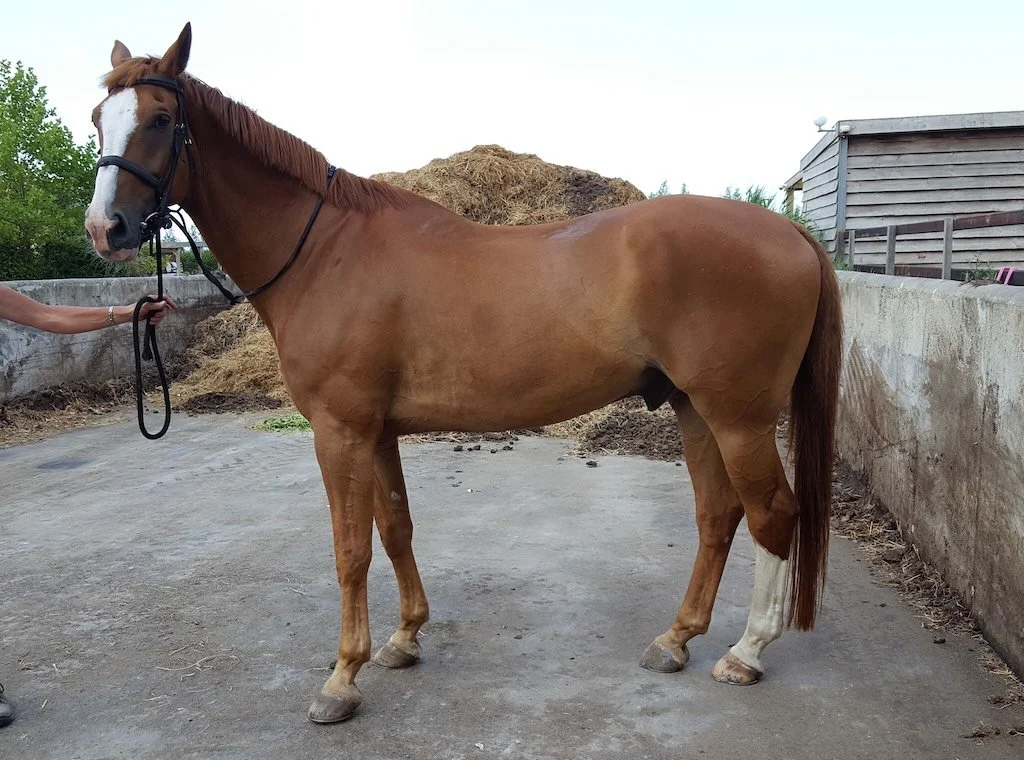
Uneven muscle development in a horse that is in regular work, should always be a red flag.
The way the horse's muscles are developed tells us a lot about how the he is using his body. Obviously, this comes in handy when we are putting time and effort in to train a horse to become a happy and healthy athlete.
It's a simple act of physiology that muscles develop in response to load being placed on them and they reflect which parts of the body work more and which ones work less. As simple as this sounds, many owners seem to struggle with this concept. I see way too many horses in regular work that are alarmingly under muscled or have obviously uneven muscle development. Here are some red flags we should never overlook, especially if the horse is in regular work.
1. The lower neck muscle (brachiocephalicus) is more prominent than the upper neck musculature. Horses with this problem appear ewe-necked and they tend to stand around with their head held relatively high. They use the brachiocephalicus muscle to drag the front leg forward instead of using their thoracic sling muscles to move the front end properly. This kind of muscle development tells us that the horse does not know how to engage his thoracic sling.
2. Prominent scapular cartilage and withers. A lot of horses have an obvious lack of muscling just behind the scapula and around the dorsal spinous processes in the withers. While it is true that this area is harder to »fill up« in high withered horses, a complete lack of muscle here is never normal. Often, this can indicate both thoracic sling dysfunction and an issue with saddle fit.
3. More muscles in front compared to the hind end. Some horses look like they are made up of two different halves. The front seems to be nicely muscles while the hind end looks like it belongs to a much skinnier horse. This is a very obvious sign that the horse is relying more on his front end than on the hind legs. Obviously, this is the opposite of what we want from a trained horse.
4. Uneven muscling in the hind end. A horse that is trained correctly, should have even musculature in his hind end. It is true that the quadriceps muscle group (on the side of the thigh) takes a while to develop, but if the horse has been in training for years and he still looks like an hourglass when viewed from behind, something is wrong. This is often coupled with overdeveloped hamstrings. It tells us that the horse is using his hind end more to push, than to carry.
If you see these muscular imbalances in your horse that is in regular work (especially if he is competing), stop and rethink your training. The muscles show the trajectory of the horse's body. Overdevelopment in one area and underdevelopment in another tells us some body parts are working too hard. This can only go on for a limited time, before things start to go really, really wrong.