Observing the changes in your horse
Noticing changes can be tricky. The changes that occur with training are subtle and if we see our horse every day it can be hard to detect them. Here is how to notice change over time.
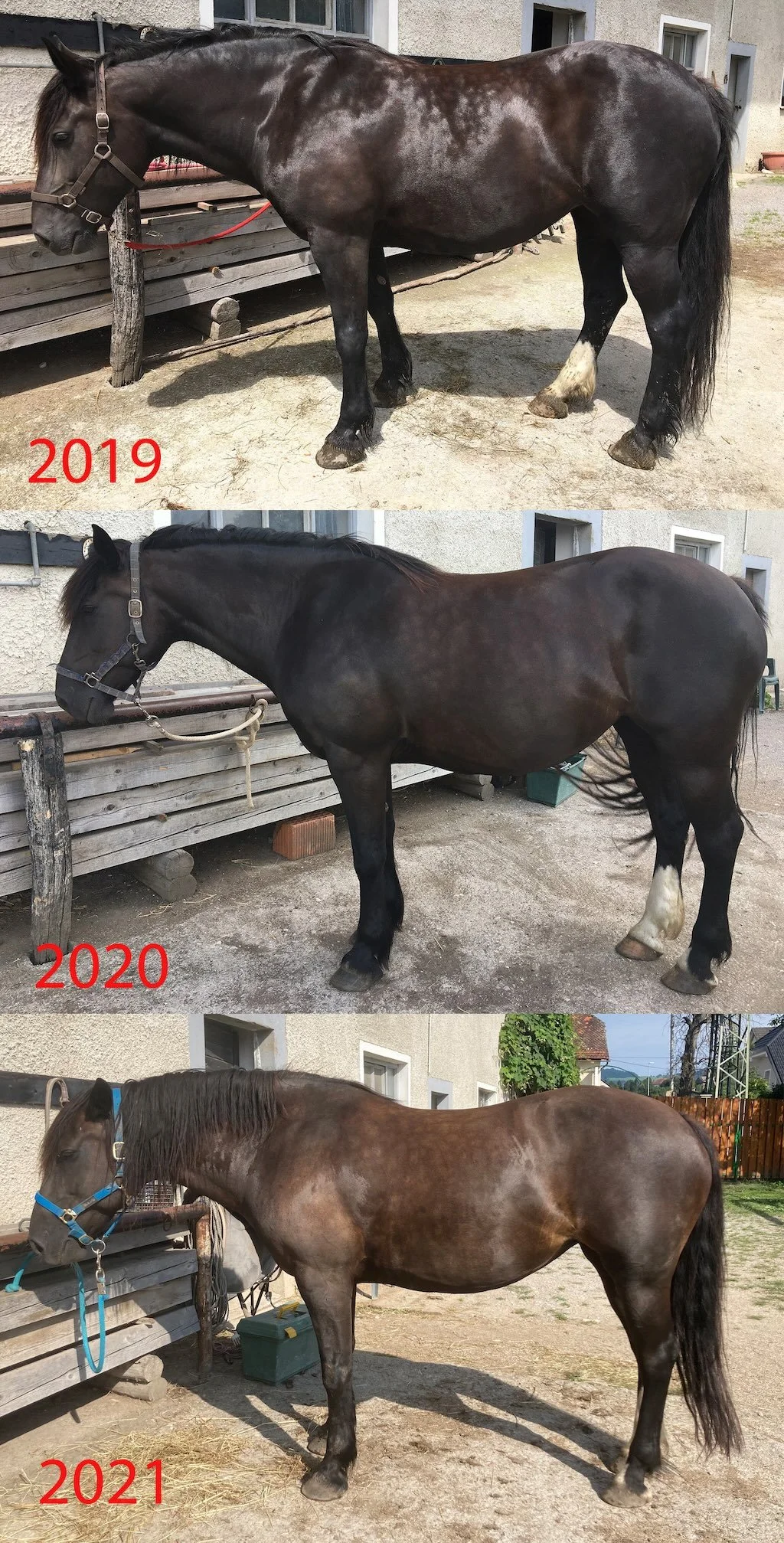
Changes in the horse’s body in response to training can take some time, but if you look at how the horse develops over the years, they can be quite profound.
I always encourage horse owners to take periodic photos of their horse. Every couple of months, stand your horse on a level surface (preferably in the same spot every time) and take his picture, ideally from the side, the front and the back. This way you can track your progress more easily, as the subtle differences become more obvious when comparing a new photo to one from six months ago. Here are some things to look out for in the photos (or when just observing your horse).
Observe the chest from the front. How wide does the horse appear in front? Do his chest muscles seem well developed, or is he »closed« in his chest? Are his feet standing as wide apart as the chest or is he standing base narrow? As the horse's thoracic sling develops, his chest muscles need to develop too. Using the thoracic sling in a proper way creates more room in the chest, allowing the legs to come to a wider stance.
Observe the horse from the side. Look at his neck. Does it appear longer? Is the upper line of the neck longer than the lower one? Is one part of the neck musculature developed more than the others, like the poll being more pronounced than the rest of the neck? When the horse uses his front end properly, his neck will develop a nice arch and it will start to appear longer. As the muscles develop evenly, the entire neck should look like it's made of one big muscle, with no lines in between and no one muscle bulging out more than the rest.
Observe the horse from the back. Are his gluteal muscles developed evenly? Is his pelvis (more or less) symmetric? Is he standing cow hocked? Is one toe pointed out (or in) more than the other one? Few horses are symmetric when you look at the height of their tuber coxae. The more important thing here is even muscle development. As the horse starts to become balanced and uses both his hind legs equally, he should develop even muscles in his hind end.
Obviously, these are just a few examples, but it's a place to start. Keeping an eye out for changes can help you tell whether or not you are on the right track. It can also help you recognise which areas need more work and what your horse is struggling with. As December is a time for reflection and making plans for the year ahead, I thought we could dive into tracking changes in your horse. Over the next few weeks, we will cover each of the areas in more detail, so I suggest you take a photo of your horse, find one from last year and get ready to observe some changes. This way making a plan for the year ahead will be easier, as you will know which areas to focus on.