Why cribbing collars aren't the answer
Cribbing can be a frustrating issue to deal with and just putting a cribbing collar on can seem like a good idea. But here's why cribbing collars can do more harm than good.
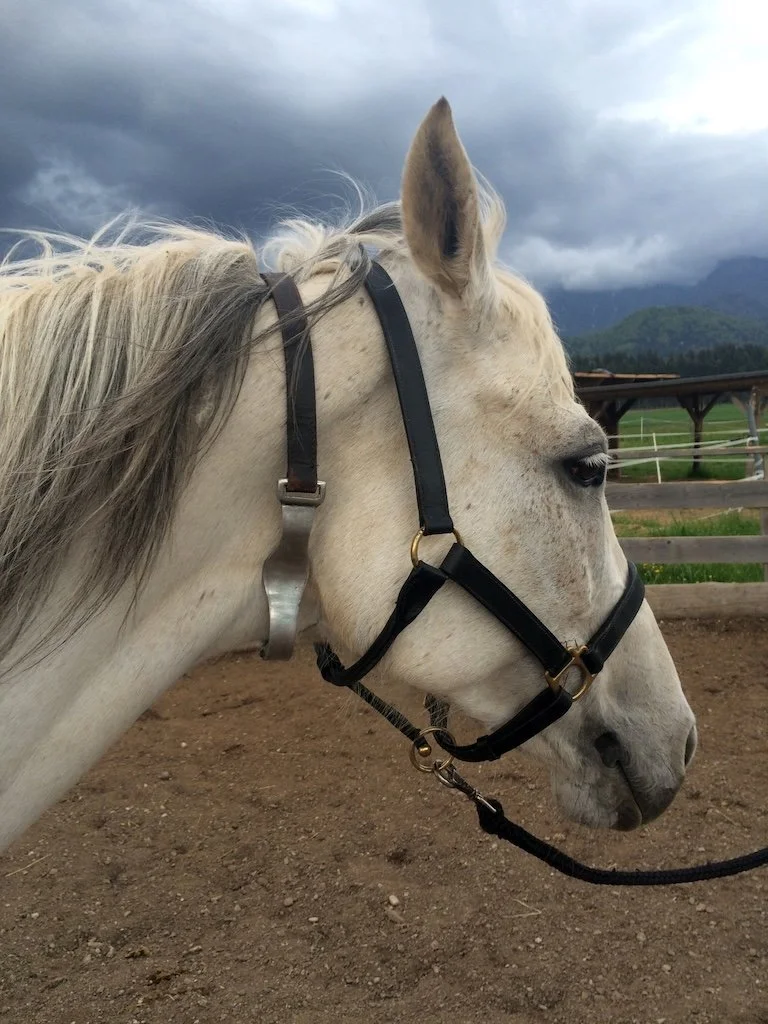
A cribbing collar prevents the horse from cribbing, but it doesn't do anything to help the horse cope with stress.
Cribbing or windsucking is a fairly common occurrence in horses. It's when a horse grabs onto a solid surface with his upper teeth, then uses his neck and abdominal muscles to arch his neck and suck air in. This is accompanied by a very specific, grunt-like noise. Cribbing is classified as a stereotypical behaviour – meaning a repetitive behaviour which doesn't serve any apparent function. Stereotypical behaviours occur in other animals too – especially ones in captivity. They occur in humans too. In horses, other examples of stereotypical behaviours are weaving and stall walking. Stereotypical behaviours are usually an attempt to cope with excess stress, most often stress due to inappropriate living conditions. Horses that live in stalls most of the day, with no social engagement and limited access to food are prime candidates to develop cribbing.
Cribbing can have a negative impact on the horse's health – from teeth issues, to muscle problems, to an increased risk of colic and gastric ulcers (although with the last two it's not really clear if there is a direct link). It makes sense that owners and riders of cribbing horses look for ways to stop it from happening. Unfortunately, one of the most popular ways to stop the horse from cribbing is using a collar. A cribbing collar is a hard contraption that is fastened directly behind the horse's jaw, which prevents him from using his muscles to wind suck. Problem solved. Or is it? If we want to understand why a cribbing collar is not the answer, we need to understand some physiology.
When a horse is cribbing, dopamine is released into his system and the brain centre for reward is stimulated. Put simply, the horse gets a kick out of it. It's similar to how our bodies react when we eat chocolate or play video games. This dopamine hit can become addictive and in fact, many experts say cribbing is a kind of addiction. It's a horse's way of dealing with stress he can't handle. And because it feels good, he keeps doing it. If we strap a cribbing collar on the horse, we don't do anything about the stress, we just take away his coping mechanism. This will increase his cortisol (the main stress hormone) levels and cause the stress to have an even more negative impact on his body. Among the negative effects of chronic cortisol elevation are decreased immune function, digestive issues, slower wound healing... Not something you would want for your horse. Because the horse is now even more stressed, he will want to crib even more when the collar comes off.
So, what's a better way? Unfortunately, there is no cure-all when it comes to cribbing. Sometimes this can be a habit that will persist throughout the horse's lifetime. Cribbing should, however, be a wakeup call for us. We need to make sure the horse has an appropriate living environment. This means being able to move freely, socialize with other horses and have access to forage. Freedom, friends and forage are the basics. Sometimes, even providing the horse with perfect living conditions won't stop cribbing. He has learned that it feels good, so he will keep doing it. In those cases, enrichment ideas go a long way. Try implementing different feed stations, a herb station, some branches to nibble on... If you look up horse enrichment ideas online, you will find many. And if even this does not work, just make sure you do as much as you can to offset the negative impacts of cribbing. Never skip a dentist appointment, and have the bodyworker out regularly to address the muscular tension that comes with cribbing. Ask them to show you some simple massage techniques and stretches that you can do on a regular basis. This will go a long way.