Are hypermobile horses more anxious?
There is a link between hypermobility and nervous system dysregulation in humans. While there are no studies supporting it, it could be that the same goes for horses too. What are the implications of that?
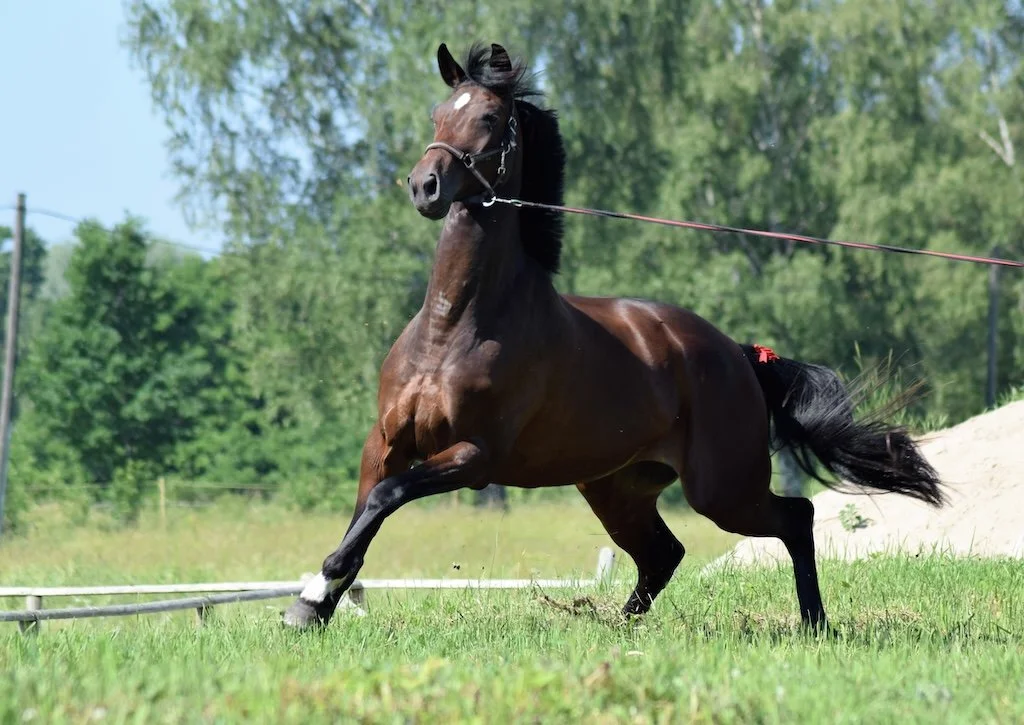
Hypermobile horses might be more sensitive to stimuli, resulting in unpredictable and potentially dangerous behaviour.
Hypermobility is a term used for horses whose joints have an abnormally large range of motion. Since a large range of joint motion means huge movement potential, it is no wonder that hypermobility has become the norm for the modern sport horse. Unfortunately, extreme movement capability comes at a price. We've discussed the health risks and common problems in hypermobile horses many times before, but this time I would like tot alk about something that's a little less obvious than the musculoskeletal problems that we encounter in these horses.
A study by Jessica A Eccles et al from 2012 looked at the link between hypermobility and anxiety. Using brain scans, they discovered that you can tell the hypermobile people from their »normal« counterparts just by looking at the volume of the amygdala. That means hypermobility is linked to the structural integrity of the brain centre implicated in normal and abnormal emotions and physiological responses. They also observed that the hypermobile people had higher interoceptive sensitivity. Remember, proprioception is the ability to sense where your body parts are in space, while interoception is the ability to sense the internal environment – how do I feel? Put another way, the autonomic nervous system (sympathetic vs parasympathetic system) functions differently in these individuals.
Now, this is a study done in people and just blindly extrapolating this data to horses might not be the most accurate. But, given how similar mammals are in terms of physiology and what we see in hypermobile horses, let's do a thought experiment and postulate the same is true in horses. That would mean that the vast majority of sport horses today are more sensitive to changes in their internal environment than the non hypermobile horse. Dysregulation of the autonomic nervous system means the horse might be more prone to becoming perpetually stuck in sympathetic (fight or flight) mode. These are the horses that spook at everything, the horses who are constantly alert, horses prone to gastrointestinal issues and stomach ulcers. The fact that their nervous system functions differently, has huge implications for their health.
We've talked about how to help the horse better regulate the autonomic nervous system and how to help horses who are constantly on the lookout here How to help overly alert horses and here Muscle disorders and nervous system regulation . Gentle approaches such as somatic work, breath work and meditation might seem a bit on the woo-woo side, but the more I think about it, the more I think these things should be mandatory for the modern sport horse. Teaching them how to better regulate their nervous system is a huge advantage, especially if the horse is living the life of a competitive horse – dealing with the challenges of hard training and travelling to new venues. Even if I'm completely off here, and the link between the amygdala structure and hypermobility exists in humans only, it's hard to deny that a lot of sport horses do exhibit signs of hyper-arousal. I realise asking competitive riders to meditate with their horses is a bit much, but alas, I am an optimist. The nervous system is incredibly important for every single system in the body. A better regulated nervous system means less stomach issues, less dangerous and unpredictable behaviour, a better immune system, more focus and calm at competitions, better sleep and a safer mount for the rider. Doesn't that sound nice?