Peeling the onion can be very tricky
As bodyworkers we often need to do detective work. Because the issue very often didn't start where the most obvious problem seems to be, we need to figure out what the restriction is protecting and address the deeper issue.
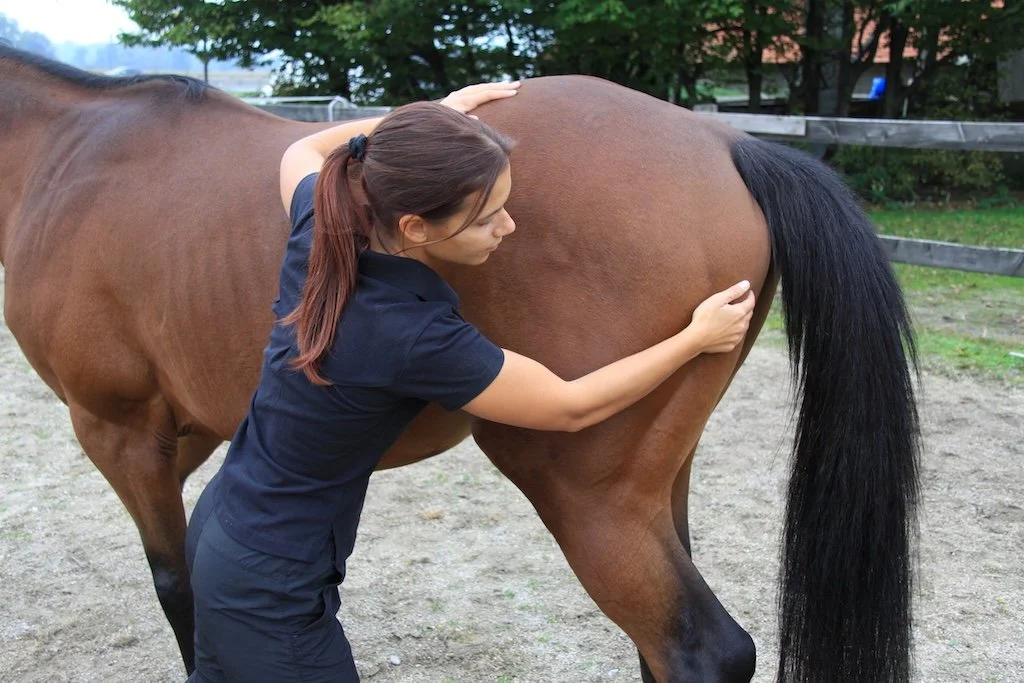
Simply releasing a tight muscle might not be enough. The trick is in figuring out why the muscle was tight in the first place.
Our horses' bodies (and our own too, for that matter) have an incredible ability of healing. Given the right circumstances, the body will always strive towards optimal functioning and will put a lot of energy into healing injured or dysfunctional tissues. Often, the body needs a little bit of help, especially when it comes to »less urgent« problems, like restricted tissues and tight muscles, but it's the body that does all the work in the end.
When we are trying to fix a problem like a tight back, for example, we are setting the circumstances up in such a way that enables to body to heal itself. We use different bodywork techniques to release tension, we provide movement to increase circulation, we do certain exercises to teach the nervous system how to relax tight areas and so on. We are setting the scene so that the body can do the rest.
As bodyworkers, we know that some issues take a while to unpack. Horses are great at hiding pain and compensating for dysfunction, so by the time the bodyworker is called out to see a horse, there are already many areas of the body involved. So, we start unpacking the problem, peeling away the layers. We are not expecting the horse to be 100% better after the first visit, but we are not expecting them to show no change at all either. The next time we see a horse, the body should have done its job and the restriction should be at least different, if not much better. If we keep coming back to the horse and working on the same muscles, the same restriction patterns, we are missing something.
If a muscle does not respond to bodywork at all, then the problem is not that muscle. The problem is whatever the muscle is protecting. And releasing that muscle without understanding what the underlying issue is, can even make the horse worse for a little while. That is, until the muscle tightens again and keeps protecting the real issue. A common example are tight hamstrings, protecting a problem higher up in the pelvis, especially around the SI area. If we just release the hamstrings, all we did is we took the protective mechanism away from the horse. So, the original problem feels worse for a while.
When we are seeing the horse for the first time, chances are we see many problems, not just one. We make a hypothesis in our minds about where the issue started and what's the best way of unpacking it. But then the follow up session is the one that really gives us some valuable clues about how right or wrong our hypothesis was. If there is no change, we were wrong and we need to re-think our approach. Just doing the same thing over and over will not give us the results we want. But here's the kicker. Maybe our hypothesis was correct, but there was something else in the body's environment that was preventing the body from healing itself. Maybe the work we did as bodyworkers is good, but then the saddle still does not fit and the issue comes back. Maybe the rider is not balanced enough, forcing the horse to compensate. Maybe there's an issue with an internal organ that is not being addressed and it keeps coming back as muscular tension. This is the riddle we need to solve. If we, as bodyworkers just do the same thing every time we see the horse, they will not get better. Not long term, anyway. If you are a bodyworker reading this, be curious. And don't forget. Sometimes it's not the tight muscle that's the problem, it's whatever it's protecting. And if you are an owner. Don't skip the follow up session, it's often even more important than the original one.