Muscle disorders and nervous system regulation
Balancing the sympathetic and parasympathetic nervous system is incredibly important in keeping horses with muscle disorders comfortable. Here are a few tips on how to manage these horses.
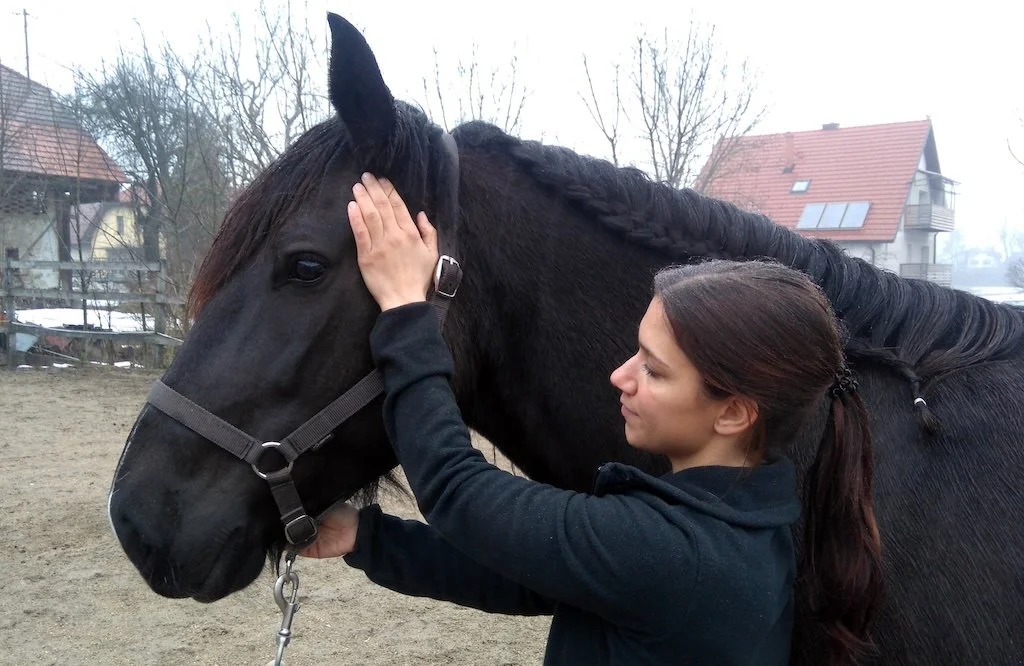
Gentle bodywork techniques go a long way with horses suffering from muscle disorders.
Muscle disorders like PSSM, HYPP and RER can be extremely difficult to manage, so every little bit that we can do to make these horses more comfortable is worth exploring. While appropriate diet and exercise play the biggest role in keeping these horses happy, making sure the nervous system is well regulated can be a huge help too.
I would like to emphasize that the different muscle disorders we see in horses have different causes and a different pathological mechanism behind them, so some strategies that are appropriate for one of them, might not be appropriate for another. In addition to this, the research that is coming out on the muscle disorders that were previously lumped into the PSSM2 category is showing us that there is still a lot we need to figure out about these diseases. However, regardless of the pathology, the bodily processes are all regulated by the nervous system, so it makes sense that optimizing the nervous system will be beneficial to the muscles as well. How do we optimize the nervous system?
As we've mentioned many times before, the autonomic nervous system is made up of the sympathetic and parasympathetic parts. The sympathetic is activated during the stress response and the parasympathetic has to do with relaxing and resting. The balance between the two is crucial for health. Some horses with muscular disorders are prone to being stuck in the sympathetic nervous system. They are often overly vigilant and have a hard time relaxing. Stress can trigger an episode of muscle stiffness, and so the vicious cycle continues. The horse is uncomfortable, making him more vigilant, which triggers another episode, making the horse even more uncomfortable and more vigilant.
We've talked about how to help the horses that are stuck in the sympathetic mode in our previous post How to help overly alert horses, and these same principles should be used when dealing with a horse with a muscular disorder. Keeping a steady routine, minimizing unnecessary stress, employing relaxation techniques like meditation and breathing can be very beneficial for these horses. In addition to that, regular bodywork is very important for horses with muscular disorders, but it matters a lot what kind of bodywork.
Horses with muscle disorders often don't respond well to deep tissue massage or chiropractic (although it really depends on the practitioner). What they do really well with is gentle fascial work and nervous system regulating techniques. So, for these kinds of horses, make sure you find a practitioner that really listens to the horse and backs off when the horse says enough. A »no pain, no gain« approach is not going to work here. We need to make sure we stay under the horse's bracing radar, inducing relaxation and a parasympathetic state. Remember, being able to relax is incredibly important for the body to be able to repair itself. And with muscle disorders, we need as much repair as we can get.