Why lameness assessment is tricky
Sometimes figuring out why the horse is “off” can be very tricky. Sometimes lameness can be very apparent, and other times it is very subtle, making it difficult to discern where the problem is.
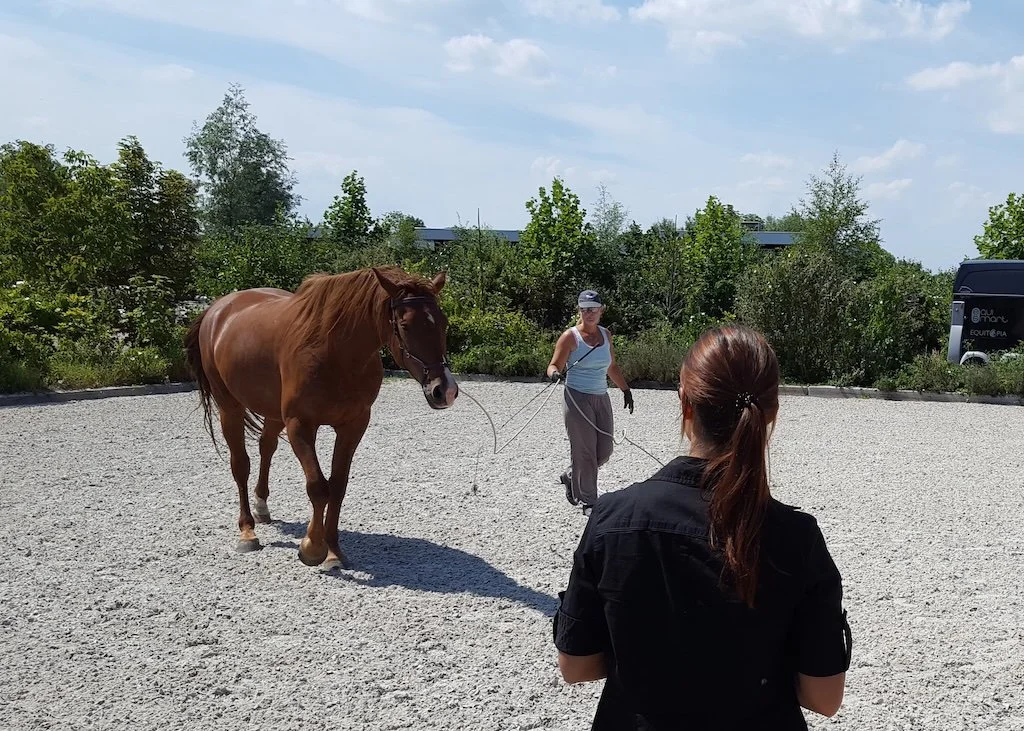
If you want to become good at lameness assessment, you will have to put in the work.
In theory it should be simple. One of the horse's legs hurts, so he will be lame. This will manifest itself in him changing the way he is moving, which we (as horse people) should be able to detect immediately. But we all know this is not the case. Detecting lameness can actually be very, very difficult, especially if it's a mild lameness. Why is that?
One thing to keep in mind is that the outward appearance of a lame horse's movement is the horse's way of making himself as comfortable as possible due to pain. In that way we can think of a lameness as a solution, not a problem. The way the horse will change his way of going to accommodate pain, will depend on several different factors. Not all lamenesses are created the same.
Weight bearing lameness
The pain can be present when the horse puts weight on the affected limb – this is called a weight bearing lameness. Usually, what will happen is the horse will try to put more weight on one or more of the other limbs to compensate. This discrepancy in weight distribution can be the easiest to observe, especially if the pain is in one of the front limbs. In that case we get the typical head nod. But what if both the front limbs hurt? In that case transferring weight to the opposite limb is not an option anymore and very often the lameness will be way less apparent than if we are dealing with single leg pain. Weight bearing lameness is also less obvious in the hind limbs, especially if it's a mild lameness. There is no head bob with a mild hind limb lameness so it's much harder to tell where the horse is transferring weight. In the case of hind limb lameness we need to learn how to observe the movement of the pelvis, and watch out for asymmetries there. But the trick here is that many horses have slightly asymmetric movement in the pelvis anyway so it can be hard to differentiate between mild asymmetries in movement and actual lameness.
Non weight bearing lameness
Sometimes, the pain isn't present when the horse puts weight on the affected limb, but is present while the limb is being moved through space. This is called non weight bearing lameness. Obviously, transferring weight onto the other limbs won't be a good strategy in this case. Instead, the horse will use his body to facilitate the movement of the affected limb through space. This can be more or less obvious, depending on the severity of the lameness. The picture here will be different than with the weight bearing lameness, especially in the hind limbs. And then, to make things even more complicated, we have lamenesses that are a combination of both weight bearing and non-weight bearing. The horse might have pain while moving the limb through space, as well as when he is putting weight on the leg.
Why every horse compensates differently
The outward appearance of the lameness will also depend on any other issues the horse might have. A horse with pain in the lumbar area will most likely find a different strategy of compensating for a mild lameness than a completely sound horse will. How the horse will compensate will also depend on his conformation and general posture. Obviously, the intention of this post is not to teach you how to be good at detecting lameness. That takes a lot of practice and observing hundreds of different horses. It can't be taught through a short post. The intention is to shed some light on why lameness assessment is so tricky and to make you feel a little bit better if you've been feeling down on yourself for not being good at assessing lamenesses. If you want to become good at it, you will have to put in the effort. Observe as many horses as you can, ask your veterinarian or bodyworker what they are looking for when observing a horse and never stop learning.