Stumbling with the hind legs
Tripping with the hind legs is often a complex issue that involves several structures and needs a holistic and systematic approach.
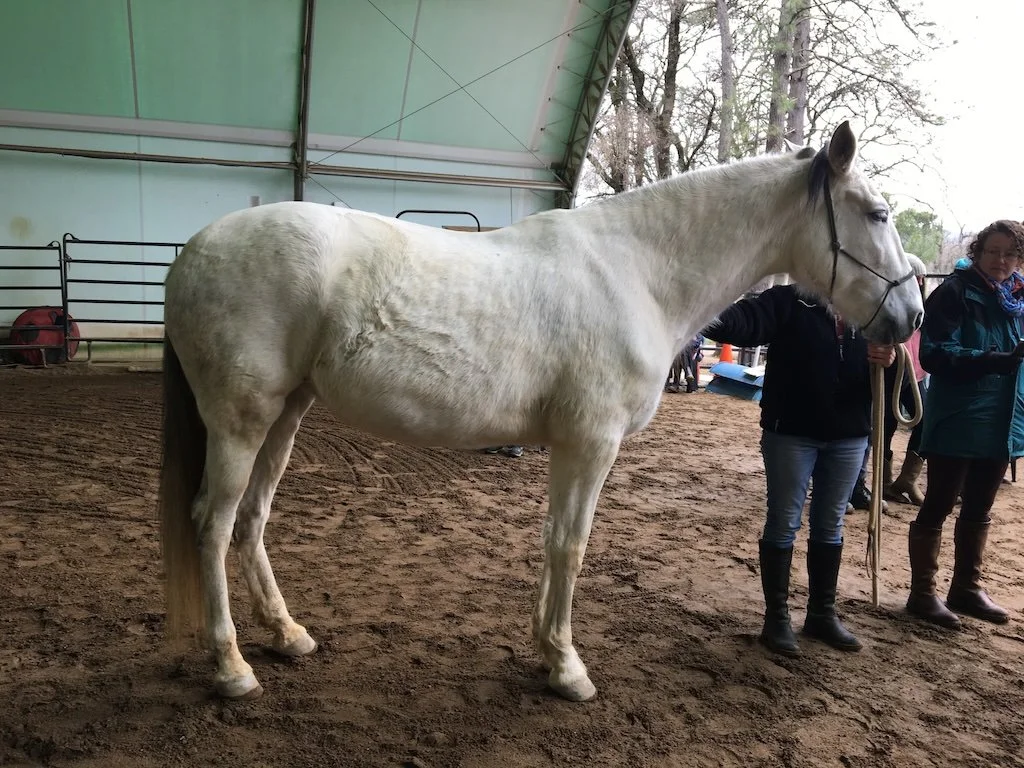
Imbalanced musculature in the hind end, especially around the stifle joint, is a common cause of stumbling with the hind legs.
If it happens every now and then, tripping with the hind legs is nothing to worry about – an inattentive moment or an irregularity in the footing can cause the horse to stumble. But when stumbling with the hind legs becomes a common occurrence, it is time to start delving deeper to find the cause.
As with the front legs, tripping behind is often a problem caused by issues with the breakover. A very common cause of this are long toes, especially when coupled with underrun heels. Sometimes, this can be a standalone problem, but very often it goes hand in hand with issues higher up. If your hoof care provider has been struggling with building healthy heels and trimming back the toes, it's probably time to look further up. A reduced range of motion in the lumbo-sacral joint or in the lumbar region can contribute both to tripping and imbalances in the feet. If your farrier has been struggling to balance those hooves with limited success, it's time to look further up. Often, the problems stem from soft tissue and can be resolved with quality bodywork and some rehabilitative exercises.
A very common cause of stumbling is a lack of stability around the patella. The patella is an important part of the horse's stay apparatus – it enables the horse to stand up with very little muscular effort. To do this, the medial patellar ligament hooks over the trochlear ridge of the femur, effectively locking the patella in place and disabling movement at the stifle joint. The horse unlocks the patella with a small effort from the quadriceps muscle and is ready to go. When the stifle joint lacks stability, the patella can get »locked« during movement and the horse struggles to unlock it. If he can't do it in time to flex the leg and move his leg, he can trip.
Another reason why the horse might be more prone to tripping is a reduced ability (or willingness) to flex the joints. Arthritis in the hock joints is a common culprit of reduced range of motion of the hind legs and tripping as a consequence. This often goes hand in hand with a loss of muscle tone, which makes the problem worse.
Very often, tripping can be a combination of more than one problem. Since issues higher up affect the lower structures and vice versa, it often happens that we need to solve more than one problem.
Starting with a thorough veterinary exam is always the best choice, to rule out degenerative joint disease and tendon or ligament pathologies. If those are present, we will need to address those first, so the horse is pain free. Then we can sort out the soft tissue restrictions higher up. If the problems have been present for a while, we might need to add a rehabilitative exercise regime to develop strength in the right muscles. During this time, regular hoof trimming will be very important. When we free up the structures higher up, the hoof can finally start to take a healthy shape and it will need supportive trimming during that time.
If none of these issues seem to be the problem or if addressing them does not improve the situation, the tripping might be due to neurological problems. How severe these are and what can be done about them, depends on the individual case.