Why does my horse stumble?
If a horse stumbles the odd time, it’s likely nothing to worry about. However, if it happens regularly, it might be time to look into it.
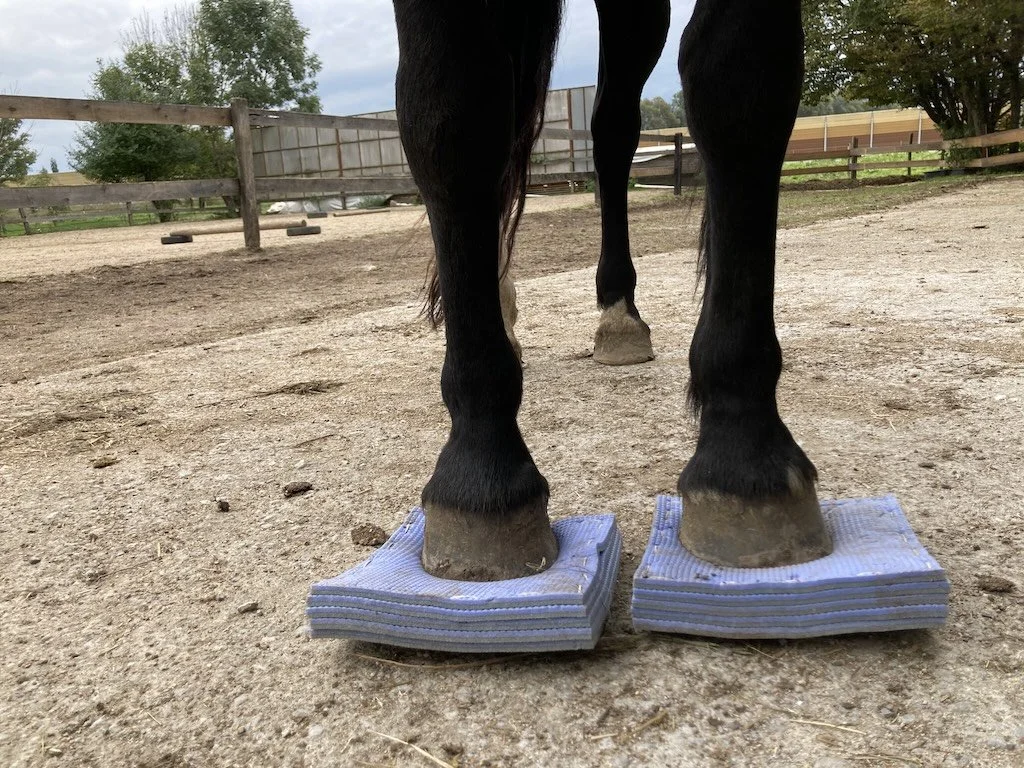
With persistent tripping, proprioceptive exercises can be very beneficial.
Stumbling or tripping is something that happens to all of us now and then. If it happens to your horse every now and then, due to uneven terrain or a moment of inattentiveness, it's usually nothing to worry about. But when it happens on a regular basis, it might be time to start looking into the problem.
When the horse has a habit of tripping with the front legs, the first thing to look at is hoof balance. Horses with excessively long toes are very prone to stumbling, as the break over of the foot is delayed and the horse can't move the leg forward fast enough. The same goes for restriction and tightness in the thoracic sling, which usually goes hand in hand with tightness in the brachiocephalicus and biceps brachii. If the range of motion of the front leg is reduced, the horse will be way more prone to stumbling.
Sometimes, tripping in front can also be a sign of deeper pathology. Pain associated with deeper structures like the flexor tendons and navicular bones can cause the horse to attempt to try to break over too fast, which leads to stumbling. Tripping can also be a sign of joint issues, as they will cause the horse to try and avoid a full range of motion, especially flexion.
So, how do we start addressing this issue? It's always a good idea to rule out any serious injury first, so a veterinary exam is a good first step. That way we can either exclude joint issues or a tendon injury, or treat it appropriately. Making sure the feet are well balanced is the next step, as a long toe can have a negative impact both on joints and tendons. Restoring a good range of motion by releasing the tightness around the thoracic sling is very important too.
With some horses, this is all that is necessary to restore normal movement and stop the tripping. If the horse still struggles, it might be a good idea to look at some proprioceptive exercises as well as thoracic sling strengthening exercises. Of course, there might be other reasons why a horse might stumble. There is always the possibility of neurologic issues, issues with the stay apparatus, muscle fibrosis and so on, but the above-mentioned problems are among the most common. Next week, we will look at the most common reasons of stumbling with the hind legs.