Saddle fitting should be a dynamic process
A bad saddle can do a lot of damage, which is why it’s imperative to really take the time it takes to find a good saddle. Never forget that fitting a saddle is a dynamic process.
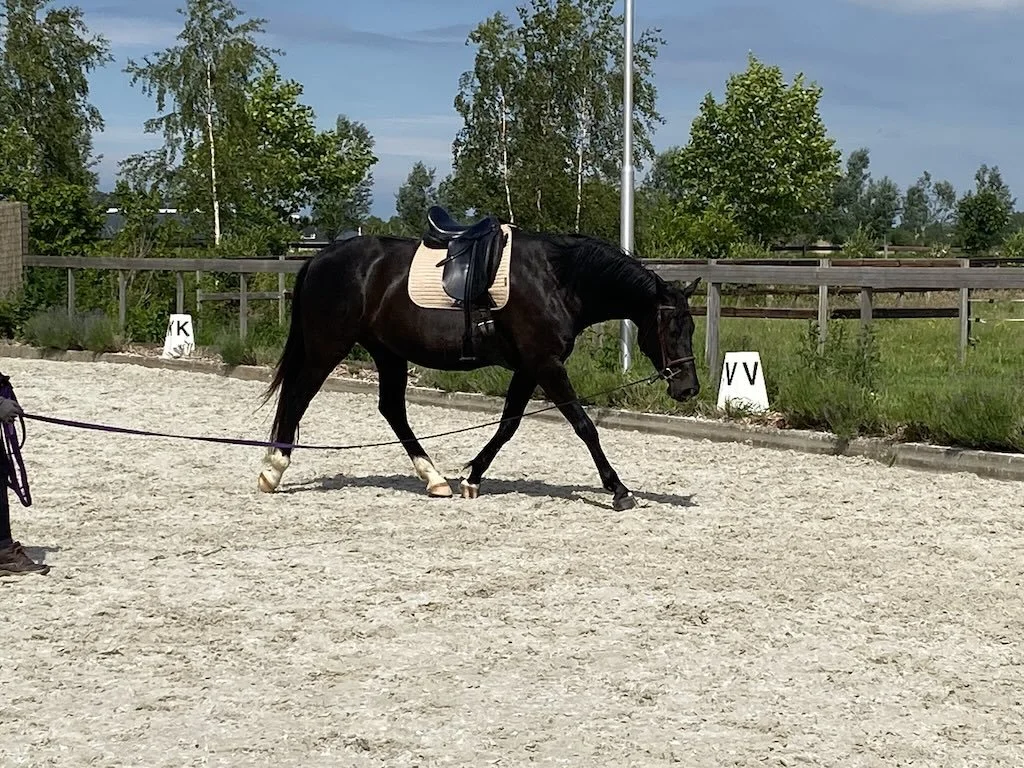
Observing the horse’s movement with the saddle and comparing it to the movement without is a crucial step in saddle fitting.
Finding the right saddle for your horse can be one of the most frustrating aspects of being an equestrian. Fitting an inanimate object onto a living being and then putting another living being on top, and having it all work is a challenging endeavour, to say the least. The process is made that much more difficult by the fact that often, the consequences of a saddle that isn't quite right can show up months down the line. During that time the horse might have developed compensation patterns, lost muscle and dealt with significant discomfort.
A good way to ensure the process of finding a good saddle is as frustration free as possible, is to not do it half-heartedly. When you get a saddle fitter out, make sure you (and him or her) have plenty of time – you will need it. A saddle fitting appointment that is over and done with in 20 minutes by just putting the saddle on and looking at it from a few angles, is very likely not going to produce the results you want. The reason for this is that the horse's back is not a rigid structure. It changes depending on the horse's posture, on the activation of his muscles and the type of work he does. So, the shape of a back of a horse that is standing still is very likely different from the shape of a back that is moving.
After putting the saddle on and making sure it seems to fit, it's imperative to observe the horse move with the saddle. Observing the horse on the lunge line is usually a good way to do this. In fact, observing the horse move on the lunge line without the saddle can provide very important information too. That way we can compare the movement with and without the saddle, which makes any negative impacts from the saddle more obvious. When observing the horse move with the saddle, observe his general posture, his head position, the movement of his limbs and the movement of his back. Does he seem relaxed? Can he move with consistent rhythm? Is he rushing? All of this is incredibly valuable information which can save our horse from a saddle that does not work for him.
After observing the horse on the lunge, it's time for the rider to get on board. Again, we are looking for any changes in movement. Head position, general posture, limb movement, relaxation...Now we can observe how the saddle fits the rider as well. Is the rider able to stay balanced? Does the saddle encourage a posture that doesn't impede the horse? Is the rider comfortable?
If the saddle seems like it should fit, but the horse is not quite comfortable, perhaps it would make sense to play around with the saddle pad or the girth. Try different combinations to find the one that works best. Saddle fitting can be daunting. It can take a long time and it can be frustrating. But don't let your impatience get the best of you. Take the time it takes – your horse will thank you for it.