Do foals need bodywork?
There is lots of evidence that foals benefit from bodywork just as much as adult horses do. It’s a wise investment for the future to have your foal looked at by an experienced bodyworker.
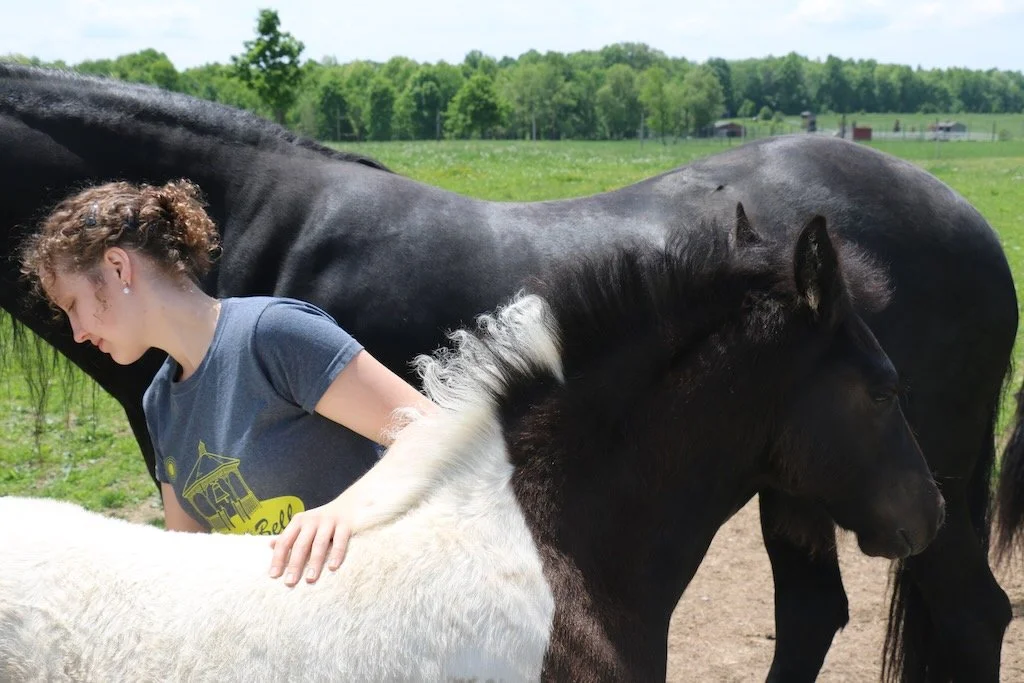
Bodywork for foals should be done in shorter sessions with frequent breaks in between.
It's the season when it seems like all we see on social media is new born foals and their happy owners and proud dams. These little cuties are everywhere! I often get asked if foals need bodywork too, or rather, how old should they be when they have their first bodywork session. As always, it depends, but there are some studies out there showing that even new born foals can already have some dysfunction present due to birthing trauma.
According to Dr. Ian Bidstrup, new born foals are quite often compromised at the area of the scapulae and the first few ribs. It makes sense, if you think about it. The chest and ribcage are the widest part of the foal that passes through the mare's birth canal. As the foal is being pushed through, there are significant forces acting on its young body. And while in the beginning it might not look like there is anything wrong with the youngster, he might develop issues later on. Dr. Bidstrup says that these issues can often show up later on as sensitivity to being tacked up or excessive »girthyness«. Some of these horses can have a harder time lifting their thorax up between the front legs (activating the thoracic sling) which can cause further problems as the horse is unable to properly carry the rider.
The good news is that since foals are very elastic and have not had time to develop major compensation patterns yet, it's much easier to resolve these problems (as long as they are not major problems) when the foal is still young. Restoring the functionality of its front end will set them up for success in life and will make it easier for them to develop correct, balanced movement.
Another situation when bodywork is necessary early on is when the foal has any sort of issue with the lower limbs. A lot of deviations can be easily resolved if the foal is able to move freely and with a little support from the farrier. Bodywork can go a long way in these situations. Early interventions help speed up the straightening process and prevent further compensation patterns from developing.
Bodywork sessions for foals should be kept short and the foal should be given lots of breaks in between. For the best results, the foal should be used to being handled and ok with human touch. If the foal is terrified of the process, we risk creating more problems than we are solving, so make sure to take his opinion into account. A good bodywork experience will create trust in the future and will make the subsequent sessions easier for everyone involved.