Observing changes in the thoracic sling
As the horse’s training progresses, his thoracic sling will change. If the training is sound, the thoracic sling should become more functional and stronger. Here is what to look out for.
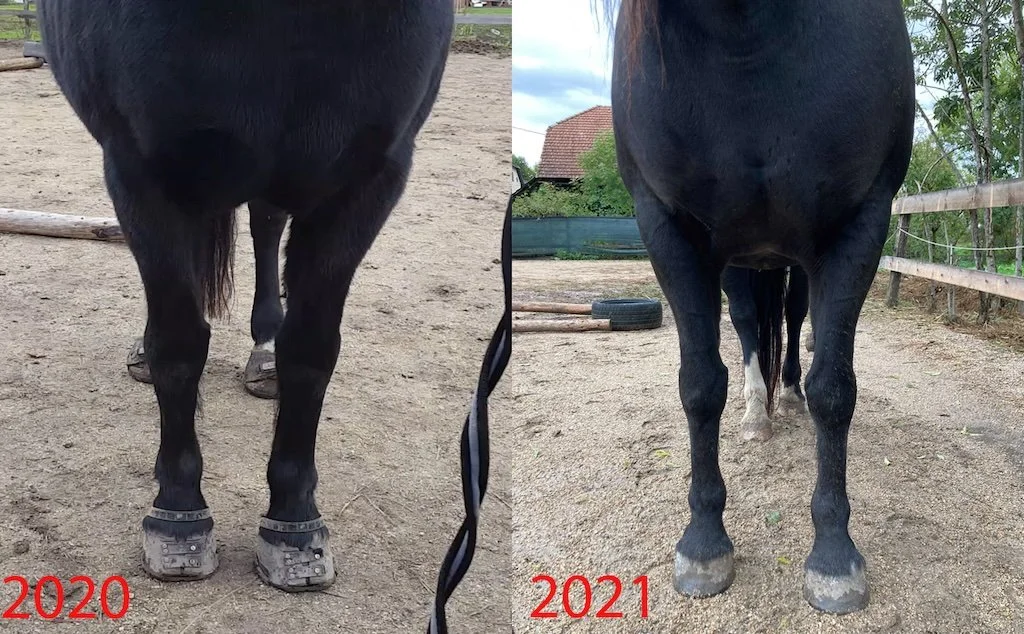
As the thoracic sling develops, the chest starts to become wider.
Last week, we looked at what changes to be mindful of when observing your horse's neck. The neck can only function properly, if the thoracic sling is functioning properly as well. This means positive changes in one area will go hand in hand with positive changes in the other area. And vice versa. Here are some things to observe when looking for changes in the thoracic sling.
The thoracic sling is comprised of the serratus ventralis, trapezius, rhomboid and the pectorals. When looking at the horse from the front, a well-developed thoracic sling will mean a well-developed chest. Usually, horses will appear wider in the chest as the pectorals muscles develop better. Some horses with dysfunctional thoracic slings can stand either base narrow or base wide, but as the sling develops, the legs can start to appear straighter. Obviously, if the problem is a conformational deviation, then no amount of thoracic sling work will make the leg straight. A wider chest and a stance that isn't base narrow or wide, means a more balanced front end and a bitter ability to absorb shock during movement.
We can note changes in the development of the thoracic sling when we observe the horse from the side as well. A horse with a well-developed and functioning thoracic sling will appear as though he is lifting himself up between the shoulder blades. This will make the front end seem higher relative to the hind end (very, very important for all downhill built horses). The transition between the withers and the rest of the back will be smooth and covered with muscle.
And important thing to note is how the horse is standing with his front legs. A balanced thoracic sling will often bring about a more vertical stance. Many horses stand with their front legs too far under the body (think goat on a rock). This has negative implications for the front-end muscles, the balance of the feet and movement potential. As the chest widens and the thoracic sling becomes strong, the legs often start to stand more vertically. I should note, however, that this requires balance in the hooves as well. Toes that are too long and underrun heels will predispose the horse to stand with his legs too far under himself.
So, in summary. A wider chest, the front end lifted between the front legs and a vertical stance of the legs, is what we are aiming for. If the changes go in the other direction, this is a red flag.