Joint problems don't come out of nowhere
Joint issues rarely appear out of nowhere, but they can be devastating, because the ability of the cartilage to heal is limited. This is why it’s crucial to understand how joint issues happen and what to do about it early.
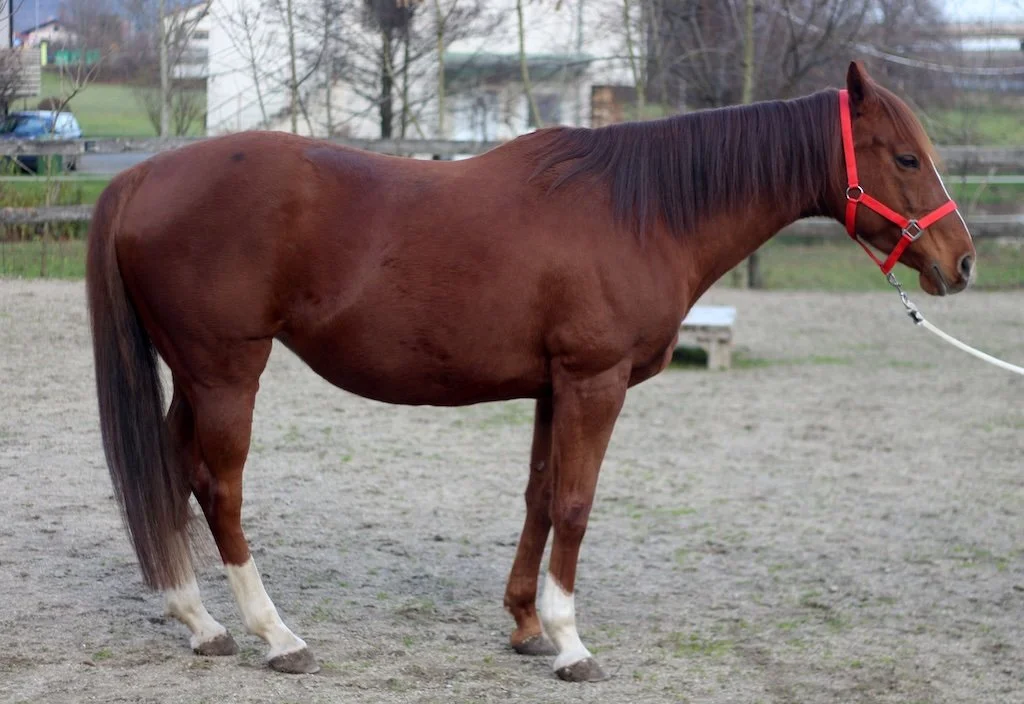
Muscular imbalances and soft tissue tension set the stage for degenerative changes in the joints.
Joint issues in horses are incredibly common. Most horse owners have probably dealt with a horse that has had arthritis either in the hocks, the neck, the joints of the lower leg. As we now know, issues in the elbow joint are present in EVERY riding horse. So, what's the story? Are horses' joints just made faulty?
Not exactly. The thing that we keep forgetting is that joints don't function in isolation. It's easy to imagine the skeletal system (and the joints) as a system, separate from the other systems like muscles, viscera or digestion, but this is far from the case. Joints are meeting places of bones, but we must not forget that the bones themselves are not actually touching (in a healthy joint, at least) and they do not move by themselves. The bones are held in place by soft tissue, which acts like guy wires. A typical joint can move through a range of motion and it's the muscles that make the movement possible. A muscle (or a group of muscles) will be responsible for one motion (for example, flexion), and a different, opposite muscle (or group of muscles) will be responsible for the opposite motion (in our example, extension). If all muscle groups acting on a joint are balanced, the joint is in a neutral position. If one group is stronger than another, the joint will be outside its neutral position and its range of motion will be reduced.
If a joint can't move through it's normal range of motion and we repetitively ask it to move (like the joints of the hock having to go through the same motion tens of thousands of times during the course of a training session) in a compromised way, this will incur wear and tear on the joint. Fast forward a few years and the wear and tear that has been causing low grade inflammation for a good while, has progressed to a degree that there is damage done to the cartilage. At this stage, fixing the problem is very difficult, as cartilage has very very limited healing potential. But the problem didn't start with the joints. It started with the muscular imbalance and the fascial tissue creating uneven pull on the bones. So, the horse's arthritis didn't start when the horse went lame. It didn't even start when you noticed he walks out of the stall a bit stiff, or that he takes longer than usual to warm up. It started when his muscles were not working in balance and we failed to notice it.
Why is this so important? Because unlike the cartilage, the muscles (and fascia) have a fantastic healing potential. Soft tissue is incredibly plastic and capable of huge changes. This is why it's so crucial to tackle and imbalances and performance issues as soon as they appear. And more importantly, if they keep coming back even after quality bodywork, it should be a huge red flag that something is negatively impacting the horse's musculoskeletal system and we need to find it and fix it, NOW. Before we get used to the stiffness and accept that that's »just how he's always gone«. It could be the training, it could be the hooves. Could be the saddle fit, the environment in which the horse lives or even his social ranking. Soft tissue balance is the key to a healthy life and we need to prioritize it. Both in our horses and in ourselves.