Five things you can do with your horse when it's too hot to work properly
Summer heat is often a big obstacle for serious training. Here are some ideas on how to spend quality time with your horse despite the heat.
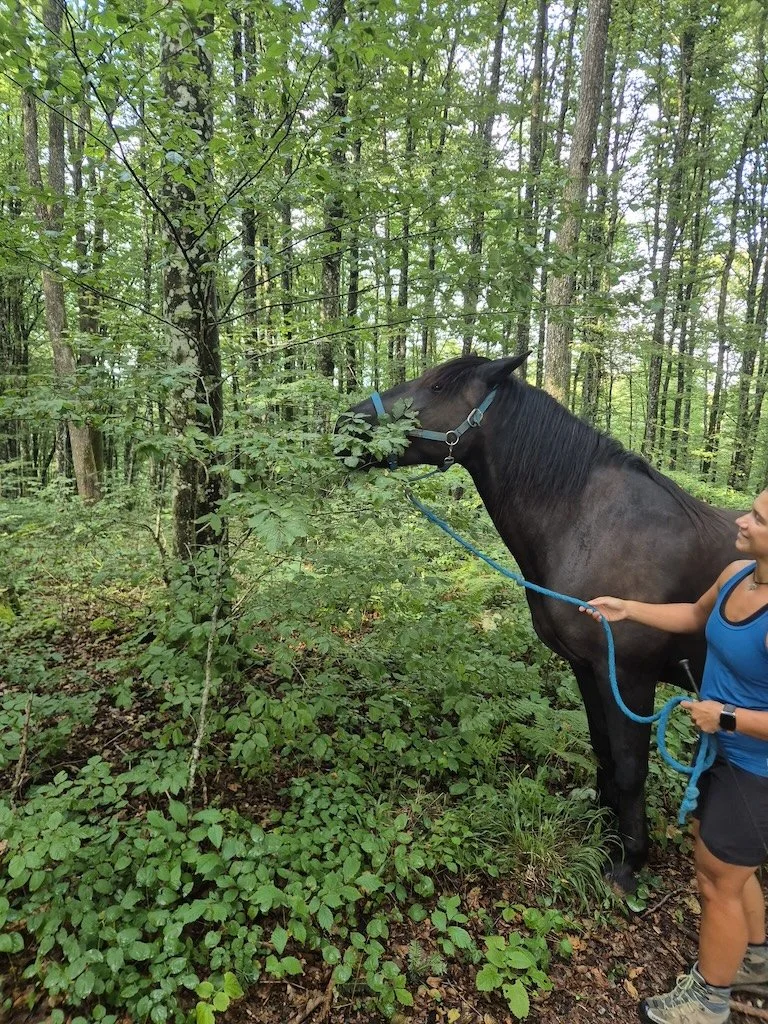
Foraging trips are a great way to spend some chill time with your horse this summer.
Summer is in full swing and the temperatures are soaring. In many areas the temperature does not drop below 20 degrees during the night and daily highs can reach up to 40. In these conditions it can be very tricky to do any structured training with your horse. Here are some ideas on what you can do to spend time with them, without it being too taxing on their (and your) bodies.
Revisit walk work. The walk is a fabulously therapeutic gait and it can have many benefits for the musculo-skeletal system. Working in walk is especially therapeutic for horses that tend to tighten up through the lumbar area and the pelvic region. Make sure to prioritize quality over quantity though. Simply ambling around the arena in walk will not produce many beneficial effects. Correct work in walk requires purpose and attention to detail. Pay attention to how the horse is using his thoracic sling and make sure to find vertical balance (equal weight on both front legs). Walk work can include serpentines, transitions, turns, cavaletti and much, much more. Be creative.
Do static core strengthening exercises. It's completely fine if we want to give our horse some much deserved time off during the summer. Since they don't lose fitness as quickly as humans do, it doesn't take that long to bring them back into shape in autumn. One thing that might be worth doing despite time off, is core strengthening exercises. This is especially important for horses that might have chronic musculo-skeletal issues and older horses. Static core strengthening exercises include carrot stretches, tail pulls, belly lifts (if appropriate!) and the thoracic sling lift. Make sure to do the exercises slowly, do three to five repetitions of each (with tail pulls, you can do about 10 and work up from there) and make sure the horse is doing the exercises correctly. In the carrot stretches and lifts, try to hold the end position for a few seconds before releasing.
Try foraging trips. Instead of long hand walks, you can try going on a shorter, but more eventful foraging trip. Bring your horse in the forest and follow his nose. Let him browse different plants, snack on tree leaves and munch on bushes. Observe which plants he prefers and watch him using his head and neck when reaching for branches of different height. Most horses will know to avoid poisonous plants, but you can never be sure, so it's a good idea to familiarize yourself with the local flora beforehand. If in doubt, a quick Google search will usually tell you whether or not a plant is safe for the horse to eat. If you really want to get nerdy, you can take photos of all the plants your horse likes, then research which nutrients they're rich in.
Meditate. We humans are creatures of action and prefer to spend time together in an active way. But horses love to just hang out and do nothing. Put your phone away, pick a quiet time of the day when the horses are resting (I find around noon works best) and do a meditation practice with your horse. Focus on your breath, observe your thoughts and allow them to leave and see what effect it has on your horse. Most horses will happily join in and relax, they might even start to doze off. Meditation is a great way to rebalance the nervous system – both yours and your horse's, so it's well worth the time investment. This is especially useful, if your horse tends to be on the spooky and anxious side.