Don't ignore the horse's head
Many things that negatively impact the horse’s performance can have their cause in the head and poll. Horses are big animals, but their heads are very sensitive, so it’s very important to treat this area gently and with respect.
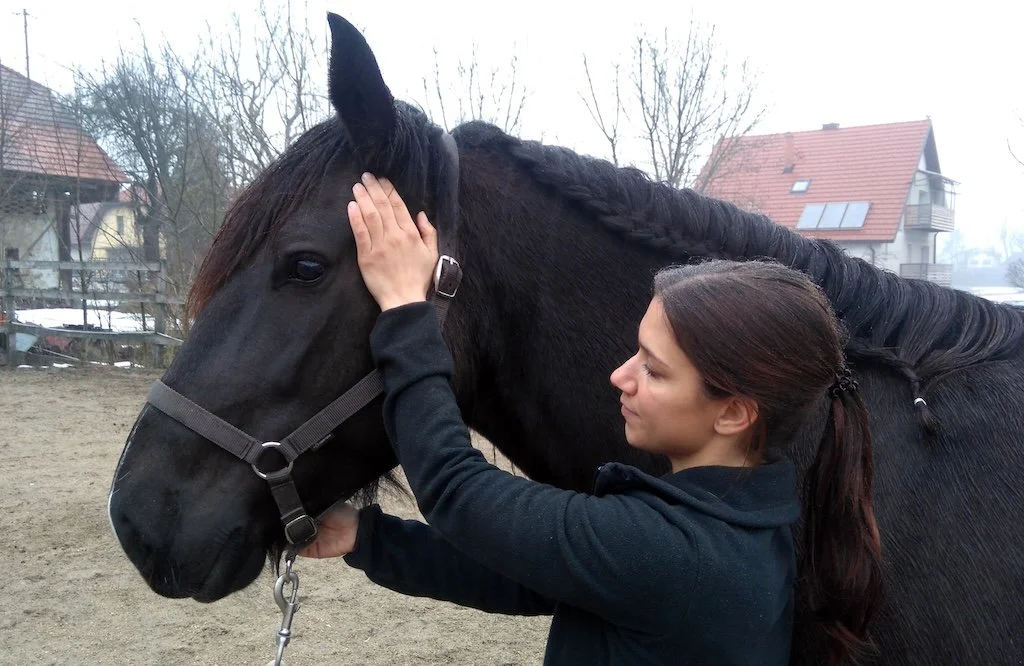
There can be a lot of tension in the horse’s TMJs and it needs to be addressed very gently.
When we talk about musculoskeletal issues in the horse's body, we often focus on the horse's back, his neck or his pelvis. But did you know that many performance issues can actually have their origin in the head? Here are some things to keep in mind.
Dental problems can wreck the whole body. Taking good care of your horse's teeth should be a priority for any horse owner. Sharp edges that form because the teeth are worn down symmetrically can cause a lot of pain and trigger compensation patterns. A pain that starts in the mouth can spread to the poll and neck, and eventually all the way to the back and hind limbs. Make sure your horse sees the dentist at least once a year or more often, depending on his specific needs.
The poll is incredibly sensitive. The junction between the head and neck is a very complex one, where many things can go wrong. It is also the area where the halter sits and the area that gets the most abuse when the horse pulls back when tied or when he is yanked and jerked with the lead rope while being led. Never forget that the poll is incredibly vulnerable and issues here can have long standing negative effects. Be very careful when tying horses and treat every pull back episode as a serious issue.
Take care of those facial nerves. The head is a sensitive place and there are many nerves located superficially in this region. Nerves don't like pressure. When putting on a bridle or a halter, make sure none of the straps are fastened tight. If using a rope halter, be aware that it has the potential to cause severe pain, so be very, very gentle with it. When a nerve becomes angry, it can become very angry, turning every gentle sensation into burning pain. Once the nerve is irritated, it is much harder to get rid of the issue than it is to prevent it in the first place, so always be mindful of the nerves.
No buckles over the TMJ. The temporomandibular joint – the jaw joint is one of those tiny areas that have an impact over the entire body. Many horses have TMJ issues – they can be caused by poll problems, dental problems, an ill-fitting bridle, harsh hands.. the list goes on. And while (hopefully) all of us take great care not to have harsh hands and to call a dentist in regular intervals, there is one thing that is often overlooked. I often see horses that have bridles and halters where buckles lie directly on the TMJ joint. Even if they aren't tight, constant pressure on the joint can cause a significant amount of discomfort.
If you suspect your horse might have issues in the head and poll area, it's important to address them as soon as possible. The first thing to check off the list is good dental care, followed by an appointment with the bridle fitter. When both those things are taken care of, it's also important to call the bodyworker to release any restrictions and restore the functionality of this sensitive area.