Show jumping is demanding on a horse’s body and can result in injuries if we don’t pay enough attention to taking care of the soft tissues. Here are some ideas how to prevent injuries in the show jumping horse.
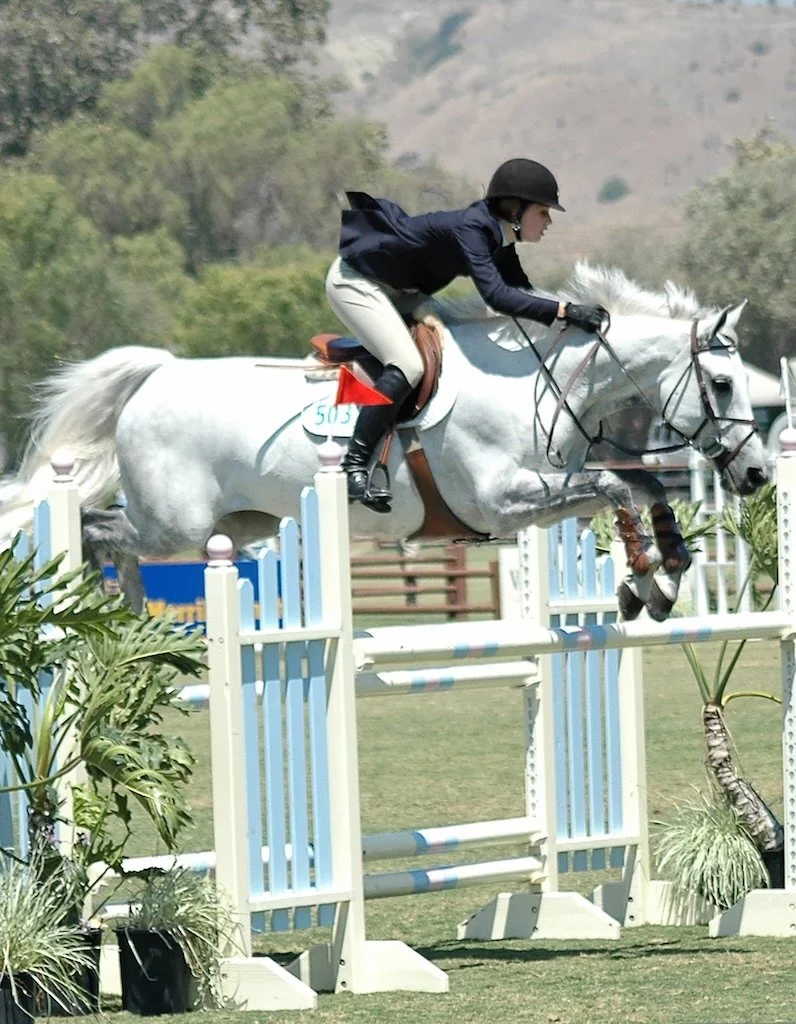
Showjumpers need strong muscles, good coordination and stamina. They are incredible athletes and we need to treat them as such.
Show jumping is one of the most demanding equestrian disciplines, both for the horse and for the rider. It requires great muscular strength, as well as good coordination and stamina. Injuries, especially those of the lower limb, are quite common in these equine athletes and they can be devastating. So, it makes sense to try and lower the risk of injuries as much as possible. Without going into the specifics of jumping biomechanics, here are a few areas that you might want to pay extra attention to, whether you are a bodyworker, trainer or just an enthusiastic rider or owner.
The front limbs of the show jumping horse have to take an enormous amount of force while landing. If the horse’s body is functioning well, a lot of this force is absorbed by the elastic and supple thoracic sling. If, however, the thoracic sling is weak or tight, this will put extra strain on the structures of the lower limbs, starting with the flexor tendons. So, any effort you put into making the thoracic sling function well, will go a long way. Here are some ideas for strengthening the thoracic sling.
Another thing a showjumper really needs is a good range of motion in the front limbs. Just before landing the front legs have to extend to the maximum as they reach for ground contact. This means that the muscles behind the scapula have to be able to safely stretch and work in a lengthened position. In addition to lateral work (a horse can’t cross the front legs without stretching those very same muscles), gentle mobilizing exercises can be great. One of my all-time favourites for good scapular range of motion is releasing the front leg forward and down.
It’s hard to talk about good range of motion of the scapula without the latissimus dorsi. This wide-ranging muscle can often tear in showjumpers, especially if they are not warmed up prior to jumping and if they have tightness and restriction in the front end. Here’s how to show the latissimus dorsi some love.
And of course, the hind end is the engine of the horse and without it, a horse simply cannot produce the force it needs to clear a jump. One of the most important areas impacting the performance of the hind legs is the lumbo-sacral joint. We outlined a simple bodywork routine for this area in last week’s post, but here it is again, in case you missed it.
So, here you have it, a bunch of ideas how to help your showjumper be the best athlete he can be. And don’t forget, proper basic training is the best prevention tool. Give the horse enough time to properly develop the muscles he needs to stabilize his body during athletic endeavour and you will have a much healthier equine partner.