Sleep deprivation in horses – red flags
While not an exhaustive list, here are some red flags to look out for when thinking about sleep deprivation in horses.
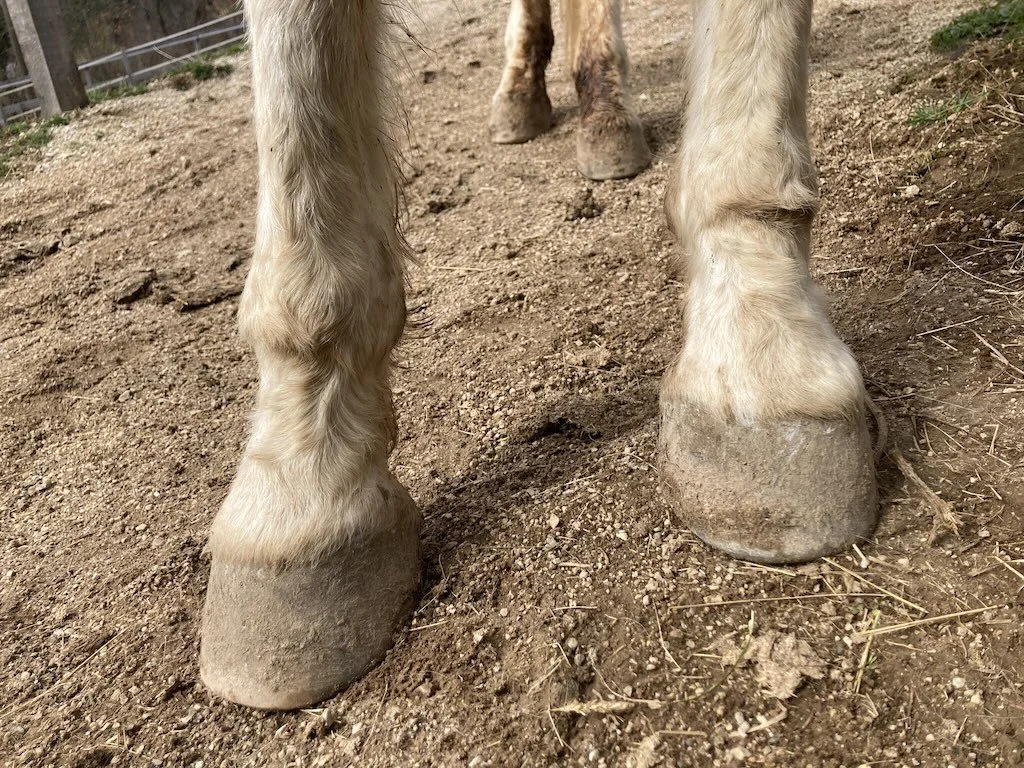
Fetlock abrasions are a huge red flag.
Sleep issues in horses are becoming more and more recognised as serious welfare concerns. While the problem is not uncommon, very often owners are not aware of the fact that their horse has a problem. So, here are some red flags to look out for.
Mystery wounds and fetlock abrasions. Many sleep deprived horses will fall into REM sleep while standing up, causing them to lose the tone in their muscles and collapse. Some might collapse onto their knees and get up, or they might collapse fully. These incidents can obviously result in wounds and minor (or mayor) injuries. The most common area where we can see evidence of collapsing due to sleep deprivation is the front of the fetlocks of the front legs. Abrasions or wounds here usually occur on both legs and can turn into big callouses over time. If you see abrasions on the front of the fetlocks there's a very strong chance that your horse isn't getting enough sleep. Obviously, wounds can appear elsewhere as well, like the face, the carpal joints or on the hind legs.
Falling asleep while being brushed. Some horses that are sleep deprived will show signs of falling asleep in situations, where they generally relax. It might happen when the horse is being groomed or tacked up, and very often it happens during bodywork sessions. The horse might start to look a bit drowsy, start to close his eyes, some start swaying and can even collapse. Usually, it's a little suspicious if the horse shows signs of falling asleep with his head very close to the ground. Generally, horses rest with their heads approximately at the height of their hip joint, as this is a comfortable position, supported by the nuchal ligament. Holding the head much lower while showing signs of drowsiness can be a sign that something is wrong.
Trouble maintaining or gaining weight. Because sleep is so important for regeneration, immune function and metabolism, a lack of it can cause a horse to be unable to keep a healthy weight and especially good musculature. While some horses seem to keep weight on without a problem, even if they are not properly sleeping, others, especially the hard keepers, will have a harder time building muscle with inadequate sleep. If the horse is not gaining weight, and you have addressed every other cause with no progress, he might be lacking sleep.
Reduced immune function. The body repairs itself during sleep, so it's no wonder that more things might go wrong when the horse is not sleeping. You might see wounds and injures that heal way slower than they should, you might see recurring health problems, like skin issues, respiratory issues or runny eyes. The horse might also be more susceptible to any infectious diseases. If the same things keep coming back, even though you do everything you possible can to resolve the problem, sleep deprivation might be the next thing to look into.
Behavioural changes. This is also quite a broad category of symptoms, but sleep deprivation can have a huge impact on the horse's general disposition as well. Some horses might become lethargic and depressed, while others can become more irritable or even aggressive. A change in mood is obviously not reason enough to suspect sleep issues, but when coupled with any of the other red flags, it might make a stronger case that the problem is sleep.
Obviously, this is not an exhaustive list and each horse is an individual, and should be treated as such. The purpose of this list is just to give you a general idea of how sleep deprivation can present so you can be better equipped to play detective, should the situation require it. Next week we will be looking at some strategies to tackle sleep problems.