Ice, cold and stiff horses
During the coldest months of the year, some horses might become a little stiffer. Here are a few ideas on how to keep them as comfortable as possible.
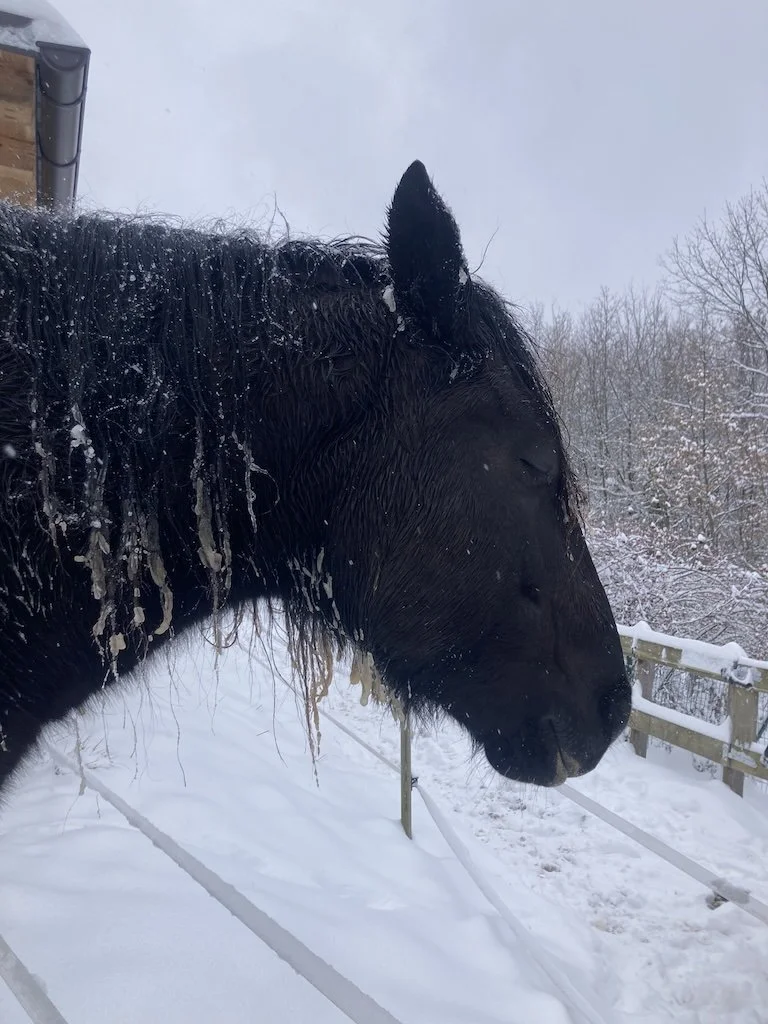
Horses generally cope very well with harsh winter conditions.
Winter is upon us and in my neck of the woods, it's been a pretty harsh one so far. The temperatures have dropped well below zero (Celsius), we have had a good amount of snow, which thawed, then froze, then thawed again – a perfect recipe for treacherous ground. I find lots of horses are a bit stiffer in the winter months, especially when the ground turns icy. Balancing on four legs can be challenging, especially if the horse has a sore back or hocks or stiffness around his pelvis to begin with.
Some people fear the winter conditions and prefer to keep their horses in stalls, which makes it all the trickier when they do venture outside – full of energy but feeling stiff from standing still. That's when it's easiest to slip and injure something. Allowing movement (when it's safe) is the best thing we can do to prevent injuries, but it is wise to make sure the conditions are as safe as possible. If you can, avoid steep, slippery hills and stick to flatter ground.
Even if we allow movement 24/7, some horses can still become a bit stiffer in the cold and ice. For these guys, we can take some extra measures to make sure they're as comfortable as possible. Just because you see they are moving a little stiffer, don't skip working with them. Moving the joints and warming up the muscles is a good idea for a stiff body. Just make sure you warm the horse up properly and that the work is kept on the lighter side. This is a good time to try some cavalletti work in walk, to play around with some in-hand work, or go on hacks in the snow (just don't overdo it). Avoid lunging, especially if the surface you're lunging on is icy.
Gentle massage and muscle warming techniques can be beneficial too. A hot (not too hot) water bottle on the lumbar spine can feel great on a stiff back. You can even try moxa sticks over the back, as their heat supposedly penetrates deeper. Just be very careful to not hold the stick too close to the horse, as the heat can quickly become too intense. Basic massage movements like long strokes, tapping and pressing into the muscle can be a great way to increase circulation and warm the muscles up. An additional bodywork appointment will be beneficial too, especially for the horses who struggle with chronic issues.
Horses are made to move and they need movement in winter just as much (or even more, actually) as they do during the warmer months. Those of us who don't have indoor arenas to work in, have to make do with whatever the weather permits, but restricting movement should be a last resort. The more the horse moves in winter, the less stiff they will be.