How soon after bodywork can a horse return to full work?
How soon the horse can return to full work after a bodywork session depends heavily on the severity of the problem. If we are aiming to change long standing negative movement patterns, we need to be patient.
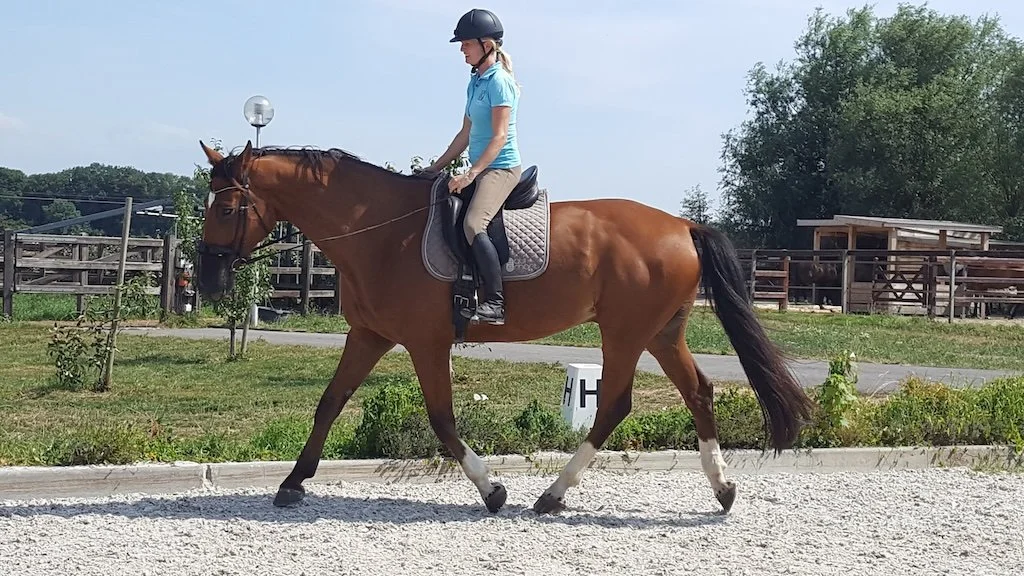
The more sensitive rider can sense even the smallest issues and can decide to take action immediately.
A question I get asked often by inquiring clients, is how much rest will a horse need after a bodywork session. And while I understand that it's a valid question, it's also one I cannot possibly answer before seeing the horse. The answer is always going to be, it depends. Here's why.
Musculoskeletal problems that are the cause of performance or behaviour issues can vary significantly in severity. Some horses will start to show performance problems as soon as something feels a tiny bit off, and others will keep performing seemingly unaffected despite huge dysfunction. On the other hand, some riders will immediately feel when the horse is a little off, and others will only notice something is wrong when the horse is obviously lame. Before seeing the horse and rider, it's very hard to tell which option we are dealing with.
Horses that are more sensitive and riders that notice the subtle signs of discomfort, will likely be back to full work in no time. The changes facilitated through bodywork will be more subtle and will enable the horse to return to full work after a day or two.
But when we have dysfunction that has been going on for a long time (think months or years), the body has been compensating to be able to do the task at hand and this compensation will usually involve some muscles that are overworked and others that are underworked. Usually, our goal will be to rebalance the system by relaxing the overworked muscles and (gradually!) strengthen the weak ones.
This is especially tricky when we are dealing with high performance horses. These horses are used to performing impressive feats using the »wrong« muscles. So, when we rebalance the body to enable the horse to tap into the »right« muscles, we need to realize that it's not fair to ask the horse to perform those impressive feats right off the bat. What's going to happen if we do? The horse will try to perform the feat in a correct way (because he is now able to do so), but the muscles he will be using, will be weak and not used to this level of engagement. So, they will tire and the horse will go back to his unhealthy movement pattern. And we are back to square one.
In these cases, the return to full work has to be gradual. I'm not saying the horse needs to rest for two weeks, but the workload needs to be significantly reduced for a good while, so his nervous system and his body have time to adapt to the changes. If we ignore this and push too far too soon, we will be creating the same problems all over again. This is a common reason why a lot of performance horses see a bodyworker every month and every month the problems that the bodyworker finds are the same. It makes more sense to invest some time and patience into the problem and actually rehab the horse properly. This will be better for the horse's long-term soundness and his performance too.