Your horse got injected – now what?
Joint injections play a big role in keeping horses sound, but it’s important to realise that they need to be coupled with rehabilitative exercises if we want them to work long term.
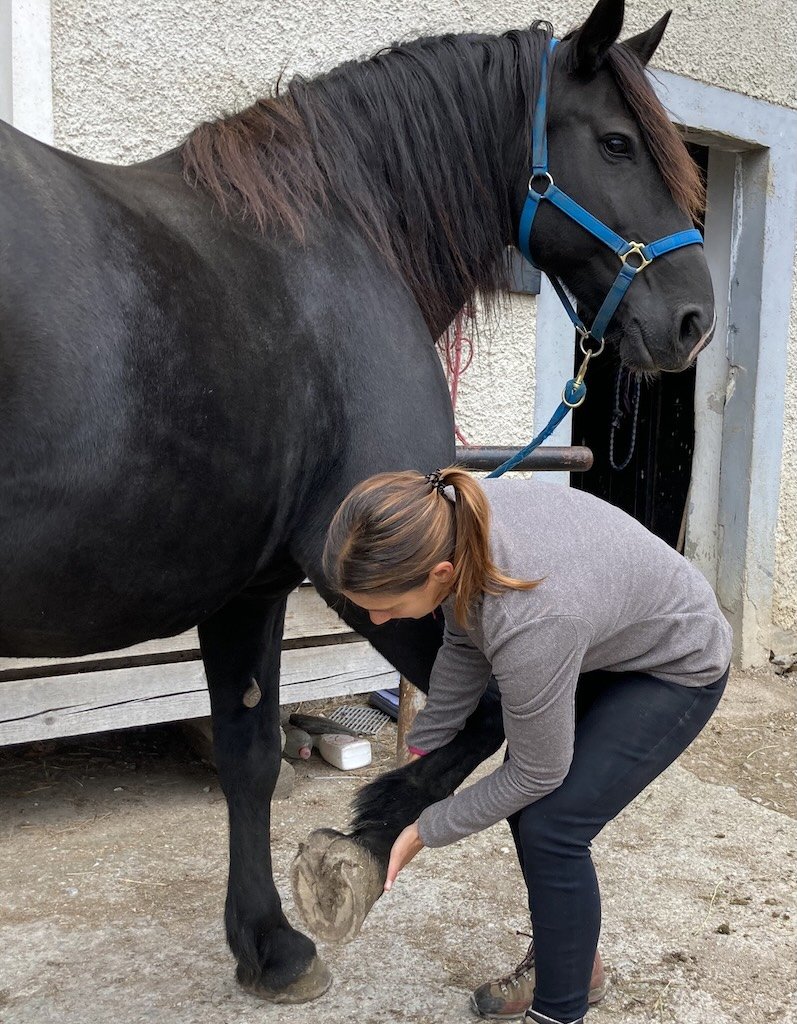
Gentle rehabilitation exercises are the key to long-term soundness following joint injections.
Joint injections play a big role in keeping horses sound, but it’s important to realise that they need to be coupled with rehabilitative exercises if we want them to work long term.
Joint injections, usually corticosteroids or hyaluronic acid, are extremely common in horses, especially in the competitive world. Some horses get their joints injected on a regular basis, often several times a year. Injections are a great tool to help manage pain and lameness in horses, but they should not be taken lightly.
I am not a veterinarian and so I am not competent to give any veterinary advice. Whether or not your horse should get injected, where and how often, should always be determined by the vet. I do however, believe that it's important for owners to realise that the injection itself is not the end of the problem-solving process – it's the beginning.
Joint injections reduce joint inflammation and offer fast pain relief. But they don't necessarily solve the issue that caused the pain in the first place. If a joint is painful, there's a reason why. And if we just take the pain away, but don't do anything to address the reason, the pain will come back sooner or later. And when it does, the horse might get injected again. It's no secret that long term use of corticosteroids leads to degradation of the cartilage and even more joint damage. So, instead of repeating the injections on a regular basis, it makes more sense to prevent pain from returning.
Painful joints often come about by long term compensation. Unhealthy movement patterns create imbalance in the muscles and soft tissues and create areas of restriction and dysfunction. Some parts are working too hard while others are not working enough. Restrictions in the soft tissues can limit joint range of motion and reduce the horse's ability to make use of the elastic properties of fascia during movement. Eventually all of this leads to inflammation and pain. If we want to solve the problem in the long term, we need to peel away the layers of dysfunction and restore healthy movement habits. This is very difficult to do if the horse is in pain, so resolving pain is very important. And resolving pain is something injections do very well. So, in essence, the joint injection opens the door by taking away the pain. When the door is open, we have two choices. The horse can go back to work (after a prescribed period of rest) or we take the time to create healthier movement patterns. I vote for the latter.
In the short term this leads to a longer break from »serious« work, but in the long term this means a reduced chance of re-injury and more soundness in the future. So, how do we go about doing this? First, it's very important to listen to the instructions you get from your vet regarding rest and exercise following the injections. This is a good time to get a bodyworker out to resolve any soft tissue restrictions that could be preventing your horse from moving in a healthy way. A good bodyworker will be able to advise you on specific exercises for your horse. In most cases, what will follow is a gentle re-training of the nervous system along with a core strengthening programme. In the beginning, this will be very gentle work, done at a walk or even a standstill. Gradually, we will build up to more demanding exercises. It's very important that we take time for this step, as building a strong foundation of healthy movement is crucial for success. A good trainer will be able to guide you in this work, along with supervision from your vet and regular visits from the bodyworker. This is a team effort, but it's well worth it.